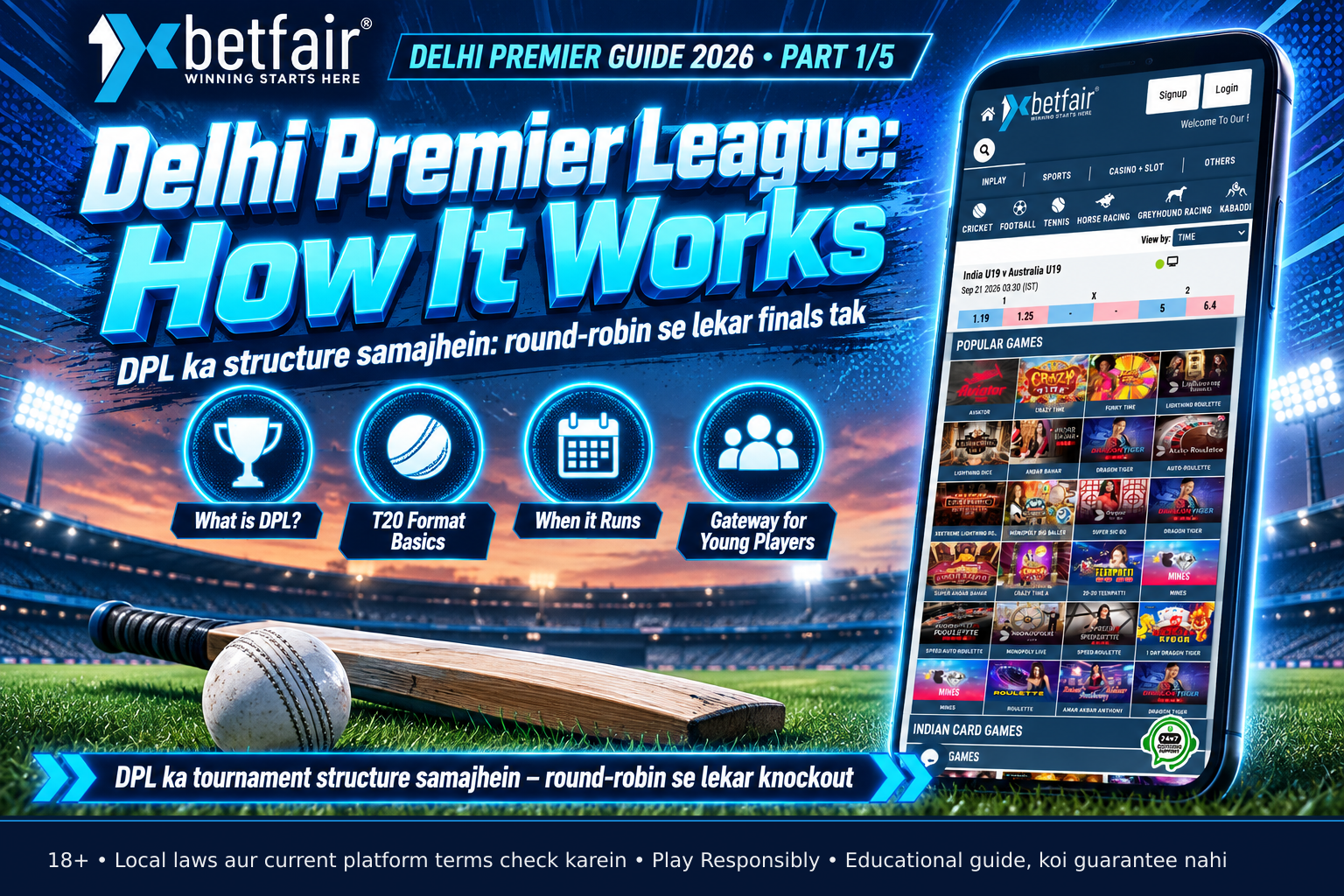
Quick answer: The Delhi Premier League (DPL) is a professional Twenty20 cricket tournament owned and operated by the Delhi & District Cricket Association (DDCA), featuring franchise teams representing different districts of Delhi. It follows the standard T20 format with 20 overs per side, and matches are read by tracking batting strike rates, bowling economy, and fielding efficiencies — not by predicting outcomes, as every ball is an independent event governed by the sport’s natural variance.
Key takeaways: * The DPL uses a round-robin group stage followed by knockout matches to determine the champion. * Each match consists of two innings of 20 overs per side, with the team scoring more runs winning. * Reading a match means understanding batting strike rates, bowling economy, and how the Powerplay overs shape the game’s momentum. * No prediction can guarantee a result — T20 cricket’s shortest format is known for upsets due to its high-variance nature. * Always check the official DDCA or DPL website for the latest fixture, team squads, and match timings before placing any engagement.
The phone glows in the dim light of your room, 9:15 PM on a Tuesday. You have the Delhi Premier League schedule open in one tab, a cricket app in another, and a nagging question: how do I actually read what’s happening in a DPL match? Maybe you have friends who talk about "economy rates" and "Powerplay" like it’s a different language, or maybe you’re just trying to follow the action without getting lost in the numbers. This guide is for you. We will break down exactly how the tournament is run, how a T20 match works, and what the key stats actually mean — without promising any "sure" outcomes or predicting who will win. Let’s begin.
What It Is and Why It Matters
The Delhi Premier League is the premier professional Twenty20 cricket competition in the National Capital Region. Owned and operated by the Delhi & District Cricket Association (DDCA), it typically runs during the pre-monsoon months, bringing together franchise teams that represent different districts of Delhi. The format is standard T20: each side faces 20 overs (120 legal balls), and the team with the higher total at the end wins.
Understanding how the DPL works matters because it is a gateway for many young cricketers in Delhi to showcase their skills, and it often serves as a selection trial for higher-level state representation. For a fan or a newcomer, knowing the structure helps you follow the tournament from the group stage all the way to the finals without missing the context. It also helps you distinguish between a competitive match and a one-sided affair by looking at the stats that actually drive the game.
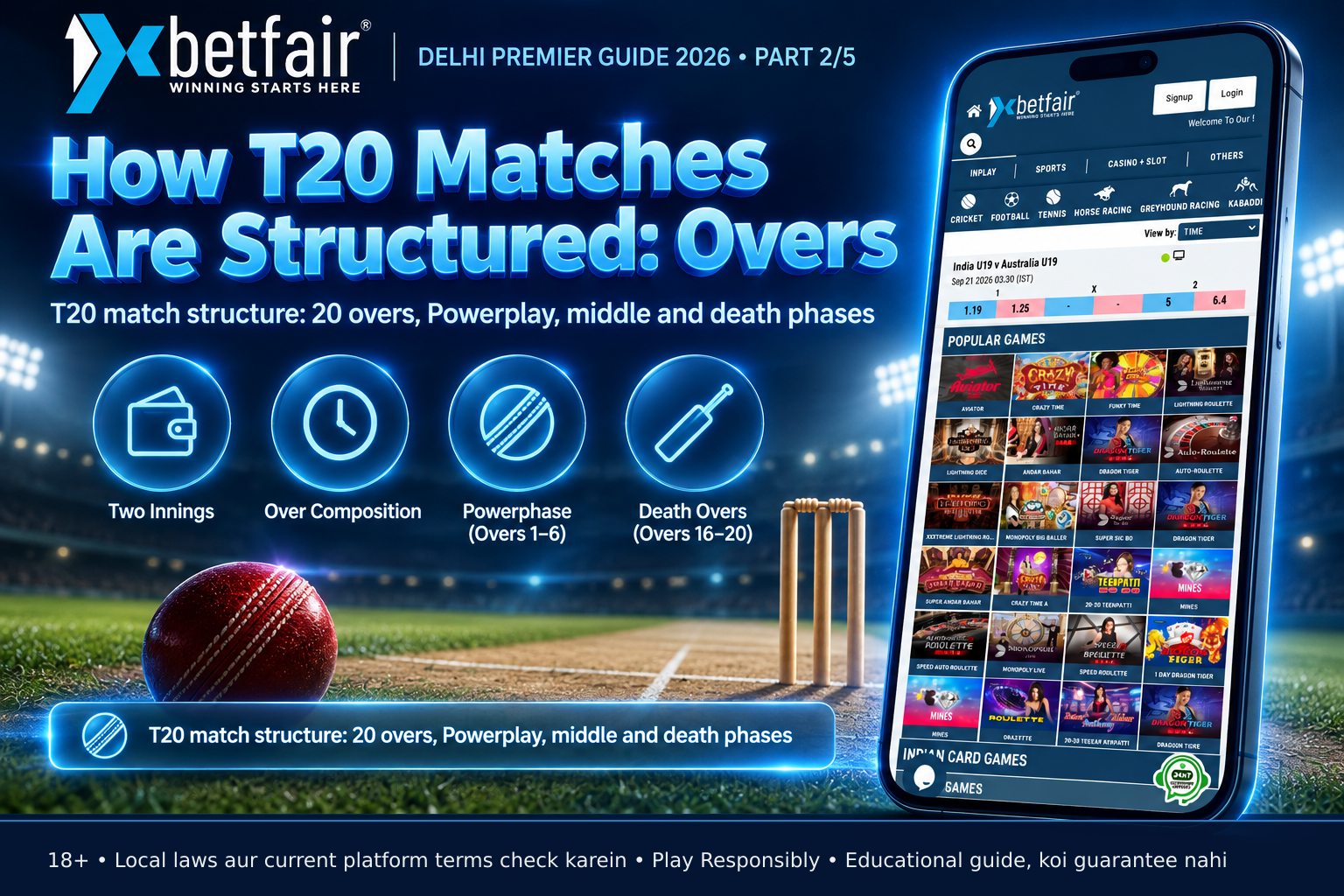
How a T20 Match Is Structured
Before diving into the DPL specifics, it helps to understand the mechanical skeleton of any Twenty20 match.
- The two innings: Team A bats first for 20 overs, trying to score as many runs as possible. Team B then bats for 20 overs to chase down that total (or score more).
- The overs: An over consists of six legal balls bowled by one bowler. After an over, a different bowler bowls the next over, and bowlers cannot bowl two consecutive overs.
- Key phases: The Powerplay (first 6 overs in a standard T20) limits the field outside the circle, encouraging batters to score quickly. The middle overs (overs 7–15) often see a shift toward building partnerships and managing wickets. The death overs (last 5 overs) are typically when batters go for maximum scoring, and bowlers try to restrict runs.
- The result: If Team B scores more runs than Team A’s total in their 20 overs, they win. If they fall short, Team A wins. If both scores are tied after 20 overs each, the match ties (or goes to a Super Over in knockout games, depending on the tournament rules).
In the DPL, these rules are applied just as they are in any professional T20 league, but with the specific playing conditions laid out by the DDCA for each season.
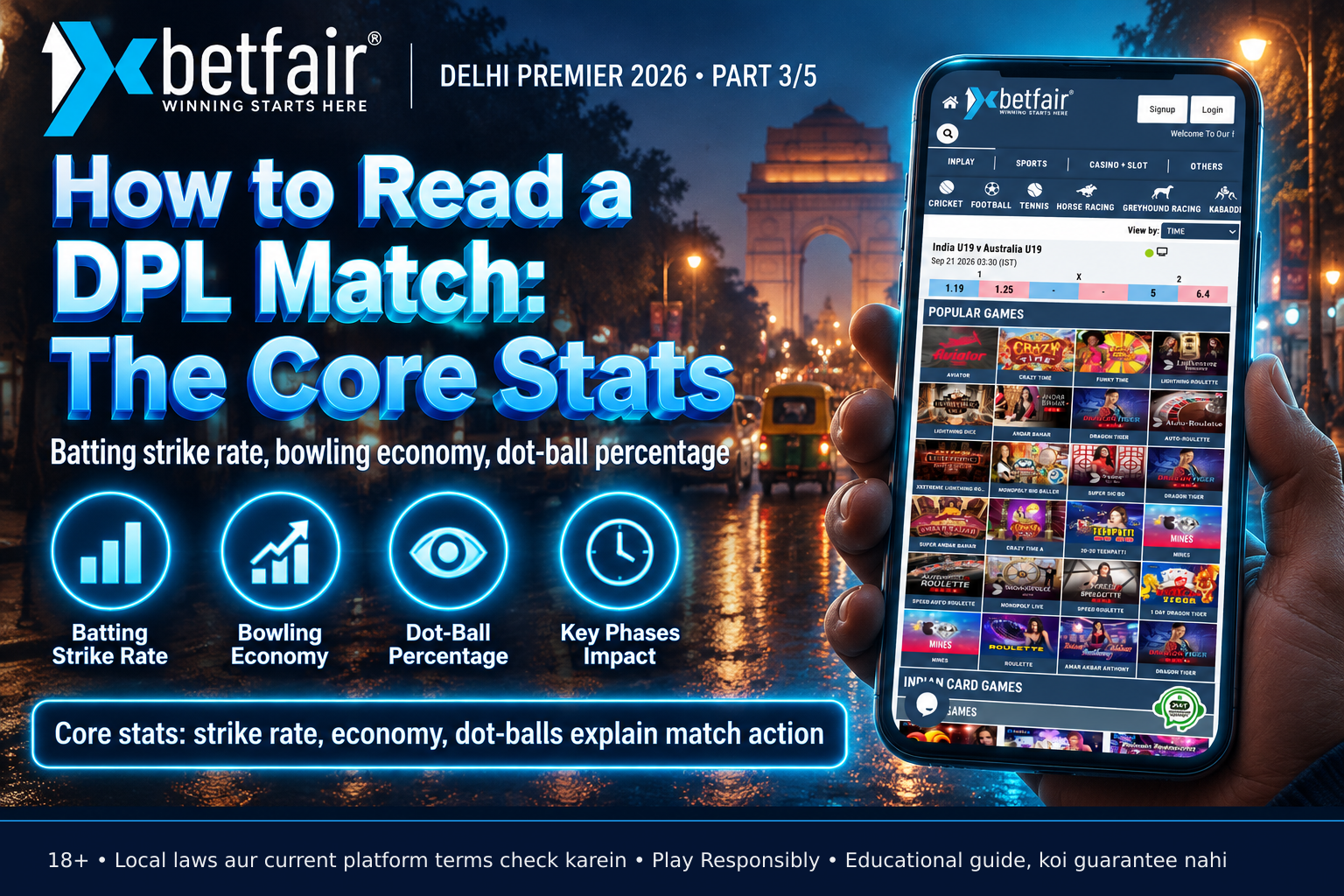
How to Read a DPL Match: The Core Stats
When you are watching a DPL match, three core stats will give you a clearer picture of what is happening on the field. These are not predictions — they are descriptive measures of what has already unfolded.
- Batting Strike Rate (SR): This is the number of runs a batter scores per 100 balls faced. A batter with a strike rate of 150 is scoring at a pace where they would make 150 runs off 100 balls. If a batter has a strike rate of 200 in the Powerplay, they are attacking aggressively right from the start.
- Bowling Economy (Econ): This is the average number of runs conceded per over by a bowler. An economy of 7.0 means the bowler is conceding 7 runs per over. A tight economy in the Powerplay can stifle the batting side’s scoring rate.
- Dot-ball percentage: This is the percentage of balls in which no runs were scored. A high dot-ball percentage from the bowling side often indicates pressure, forcing batters to take risks and potentially edge catches to the wicketkeeper or fielders.
You will also see wickets and runs scored in the scoreboard, but strike rate and economy tell you the pace and efficiency of the action, which is often more telling than raw totals alone.
Comparison: Batting Strike Rate vs. Bowling Economy Across Phases
To help you track these numbers live, here is a comparison table of typical strike rates and economies you might see across the three phases of a T20 match. These figures are illustrative examples based on general T20 patterns; the exact numbers will vary by match, player form, and pitch conditions.
| Phase | Typical Batting Strike Rate | Typical Bowling Economy | What It Indicates |
|---|---|---|---|
| Powerplay (Overs 1–6) | 140 – 180 | 6.0 – 8.5 | Batters are attacking; bowlers are trying to settle in. High strike rates here can set a tone for the innings. |
| Middle Overs (Overs 7–15) | 110 – 130 | 5.0 – 7.0 | Batters look to rotate strike and build partnerships; economies often stabilize as batters look for gaps. |
| Death Overs (Overs 16–20) | 180 – 220+ | 8.0 – 10.0+ | Maximum aggression from batters; bowlers try to contain, but runs often flow freely in the final overs. |
Table: Illustrative comparison of batting strike rates and bowling economies across T20 phases. These are example ranges; actual match data will differ.
Device and Account Security
If you are looking to follow the DPL on a mobile app or website, a quick security check protects your account and ensures you are viewing official content.
- Verified web address: Always type the official domain directly (e.g., the DDCA website or the official DPL portal) rather than clicking links from unknown sources.
- HTTPS: Look for the padlock icon in your browser’s address bar. This means the connection between your phone and the website is encrypted, protecting any data you enter.
- Two-factor authentication (2FA): If the platform offers 2FA, enable it. This adds a second step (usually a code from an app or SMS) to verify it is you logging in.
- Never share OTP or PIN: No legitimate support agent will ever ask for your one-time password or PIN. If someone messages you asking for these, it is a scam.
- Download only from official stores: If you are getting an app, use the Google Play Store or Apple App Store. Avoid “APK” files from random websites, as these can carry malware.
Taking a 30-second safety check before you log in takes seconds but saves you from bigger headaches later.
Common Mistakes to Avoid
When following a tournament like the DPL, a few common traps can leave you confused or misled.
- Mistaking raw runs for performance: A batter who scores 40 runs off 30 balls has a strike rate of 133.33, while another scores 50 off 40 balls at a strike rate of 125. The first batter has scored at a faster pace, even though the second made more runs. Always look at the rate, not just the total.
- Overreacting to a single over: T20 cricket is high-variance. A bowler conceding 20 runs in one over does not mean they are "out of form" permanently, nor does a batter hitting a six off the last ball guarantee they will carry that form. One over is a tiny sample size.
- Looking for "sure" patterns: Some bettors or forum posters claim that "teams winning the toss always chase" or "Powerplay always decides the match." These are general tendencies, not rules. In the DPL, as in any T20, the toss outcome is just one small factor among many, and no single phase guarantees a result.
- Ignoring team news: Playing XIs are announced shortly before the match. A key bowler resting or a batter returning from injury can shift the balance. Check the official DPL or DDCA social media channels for the latest team updates.
Pre-Session Checklist
Before you settle in to watch a DPL match, run through this quick checklist. Check each item and mark it as done.
| Step | What to Do | Status |
|---|---|---|
| Verify the fixture | Check the official DPL or DDCA website for today’s match time and venue. | [ ] |
| Check the playing XI | Look at the announced squads; note any key absences. | [ ] |
| Set a budget (if engaging) | Decide how much time or money you will spend, and stick to it. | [ ] |
| Enable 2FA | If logging into a platform, ensure two-factor authentication is on. | [ ] |
| Use verified links only | Open the site directly; do not click forwarded links from messages. | [ ] |
Brand Section
The Delhi Premier League is organized by the Delhi & District Cricket Association (DDCA). If you are looking for official fixture lists, team squads, or match updates, visit the DDCA’s official website or the DPL’s verified social media channels. Always confirm the current season’s terms and conditions on the regulator’s page, as tournament formats and schedules can change from year to year. This guide does not carry any promotional offers, bonus percentages, or sister-brand affiliations — it is an educational explainer only.
Call to Action
Now that you know how the Delhi Premier League is structured and how to read the key stats, the next time you watch a match, you will have a clearer frame of reference for what is happening on the field. Keep your security habits sharp, respect the game’s natural unpredictability, and enjoy the cricket.
18+ | Play responsibly. Decide your budget before the session, and never chase losses.
FAQ
Q: What is the Delhi Premier League and who runs it? A: The Delhi Premier League is a professional Twenty20 cricket tournament conducted by the Delhi & District Cricket Association. It features franchise teams representing Delhi’s districts, and matches follow standard T20 rules with 20 overs per side.
Q: How many teams play in the DPL, and how are they selected? A: The number of teams and the selection process are determined by the DDCA for each season. Franchises typically represent different districts or areas of Delhi, and players are selected through a combination of drafts, local talent identification, and regional qualifiers.
Q: Can I predict the winner of a DPL match based on strike rates? A: No. Strike rates and economy figures describe what has already happened in the match; they do not guarantee future outcomes. T20 cricket’s shortest format is known for high variance, and upsets are a natural part of the game.
Q: What does "Powerplay" mean in a DPL match? A: The Powerplay refers to the first six overs of an innings. During this phase, fielding restrictions are in place, which typically encourages batters to score more freely and bowlers to focus on taking early wickets.
Q: How is the winner decided if the scores are tied after 20 overs each? A: If the scores are level after both teams have completed their 20 overs, the match is declared a tie. In knockout stages, the tournament’s specific playing conditions (often a Super Over) may be used to break the tie, but this depends on the DDCA’s rules for that season.
Q: Where can I find the official DPL schedule and results? A: The official schedule, results, and team announcements are posted on the Delhi & District Cricket Association’s official website and their verified social media accounts. Always check there for the most current information.
Q: Is it safe to use third-party apps to watch DPL live streams? A: Only use apps from official app stores (Google Play or Apple App Store) or the broadcaster’s verified platform. Avoid downloading APK files from unknown websites, as these can pose security risks to your device.
Q: What should I do if I see a "guaranteed win" tip for a DPL match? A: Treat it with extreme caution. No one can guarantee a sports outcome, and any claim of a "fixed" or "sure" result is likely a scam. Rely only on official match analysis and the natural flow of the game.
Q: Can I bet on the Delhi Premier League? A: Gambling laws vary by state in India. If you choose to engage in any form of betting, ensure you are doing so within the legal framework of your jurisdiction, on a licensed platform, and always play responsibly with a pre-set budget. Remember that 18+ is the minimum age, and there is no guaranteed return on any wager.
Q: How often does the DPL happen, and when is the next season? A: The DPL typically runs in the pre-monsoon months, but the exact dates and schedule are set by the DDCA each year. Check the official DDCA calendar for the announced season timeline.
Q: What is the difference between the DPL and the IPL? A: The Indian Premier League (IPL) is a larger, franchise-based T20 tournament featuring teams from across India, often with international stars. The Delhi Premier League is a smaller, district-based competition operated by the DDCA, focusing on local Delhi talent and serving as a development pathway.
Q: Where can I learn more about cricket statistics like strike rate and economy? A: Many sports websites and cricket coaching platforms explain these terms in detail. The DDCA’s coaching resources and reputable cricket education sites are good starting points for understanding how these stats are calculated and what they indicate about player performance.
Related reading
- Major League Soccer (MLS) Explained 2026 (1xbetfaircustomercare.com)
- J1 League and K League Explained 2026 (1xbetfaircustomercare.com)
- UEFA Conference League Explained 2026: Why Smaller Leagues Get a Route In (1xbetfaircustomercare.com)
- Bat or bowl first: how the toss is decided 2026 (1xbetfaircustomercare.com)
Visit the official 1xbetfair site: 1xbetfair.me. 18+ only. Please play responsibly.