

Quick answer: The T20 World Cup begins with a group stage where every team plays each other in their group; the top two from each group, plus the best third-placed teams, advance to the Super 8 stage. In the Super 8, teams are split into two groups and the top two from each advance to the semi-finals. If a match is tied after the full 20 overs per side, a Super Over decides the winner; if that is also tied, the winner is the team with the most boundaries hit in the main match. The final knockout pair play one match each, with the winners meeting in the final.
Key takeaways – Group stage: round-robin, top two plus best thirds go through. – Super 8: two groups of four; top two from each reach semis. – Ties: Super Over first, then boundary count as tie-breaker. – Knockouts: semi-finals then final, single elimination. – 18+ only; decide your budget before the tournament starts.
What it is and why it matters
The ICC Men’s T20 World Cup is the international cricket tournament that decides the world champion in the shortest format of the game. In 2026, the format has been adjusted to include a "Super 8" stage after the group matches, giving more games meaning for more teams before the knockout rounds begin. Understanding how the stages link together and what happens when a match cannot produce a winner helps you follow the tournament more clearly and make informed decisions if you are watching or playing fantasy contests.
The group stage
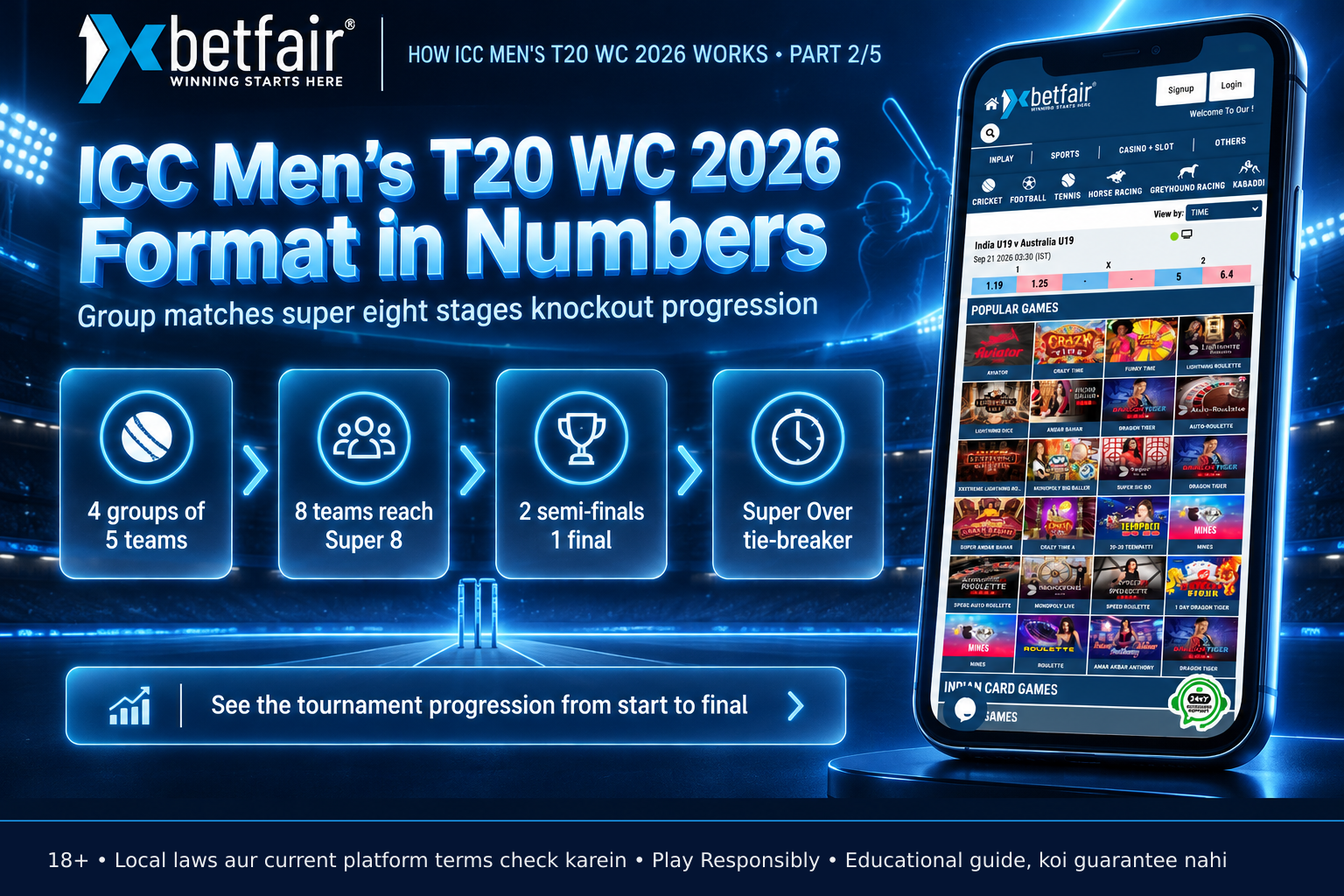
The 20-team tournament is divided into four groups of five teams. Each team plays the other four teams in its group once. A win earns two points, a tie or no-result earns one point, and a loss earns zero. After all group matches are played, the teams are ranked by total points, then by net run rate if the points are level.
The top two teams from each group qualify automatically for the Super 8 stage. If the points and net run rates are identical across groups, the International Cricket Council (ICC) uses a set of tie-breaking rules: most wins, highest combined net run rate across all group matches, and then a draw of lots. The best two teams across all groups that finished third, based on points and net run rate, also qualify to fill the Super 8 slots.
Example: If Group A has teams finishing with 6 points each, the team with the higher net run rate takes the top spot. If two teams have exactly the same points and net run rate, the tie goes to the team with more victories in the group stage.
The Super 8 stage
The 8 qualifying teams are split into two new groups of four. Each team plays the other three teams in its Super 8 group once. The same point system applies: win = 2, tie/no-result = 1, loss = 0. The top two teams from each Super 8 group advance to the semi-finals. The same tie-breaking rules — most wins, best net run rate, then draw of lots — decide who finishes second if the points are level.
Example: In Super 8 Group 1, if Team X and Team Y both finish with 4 points and the same net run rate, the team with more wins in that stage goes through. If they are still level, the ICC’s tie-breaking procedure applies.
Ties and super overs
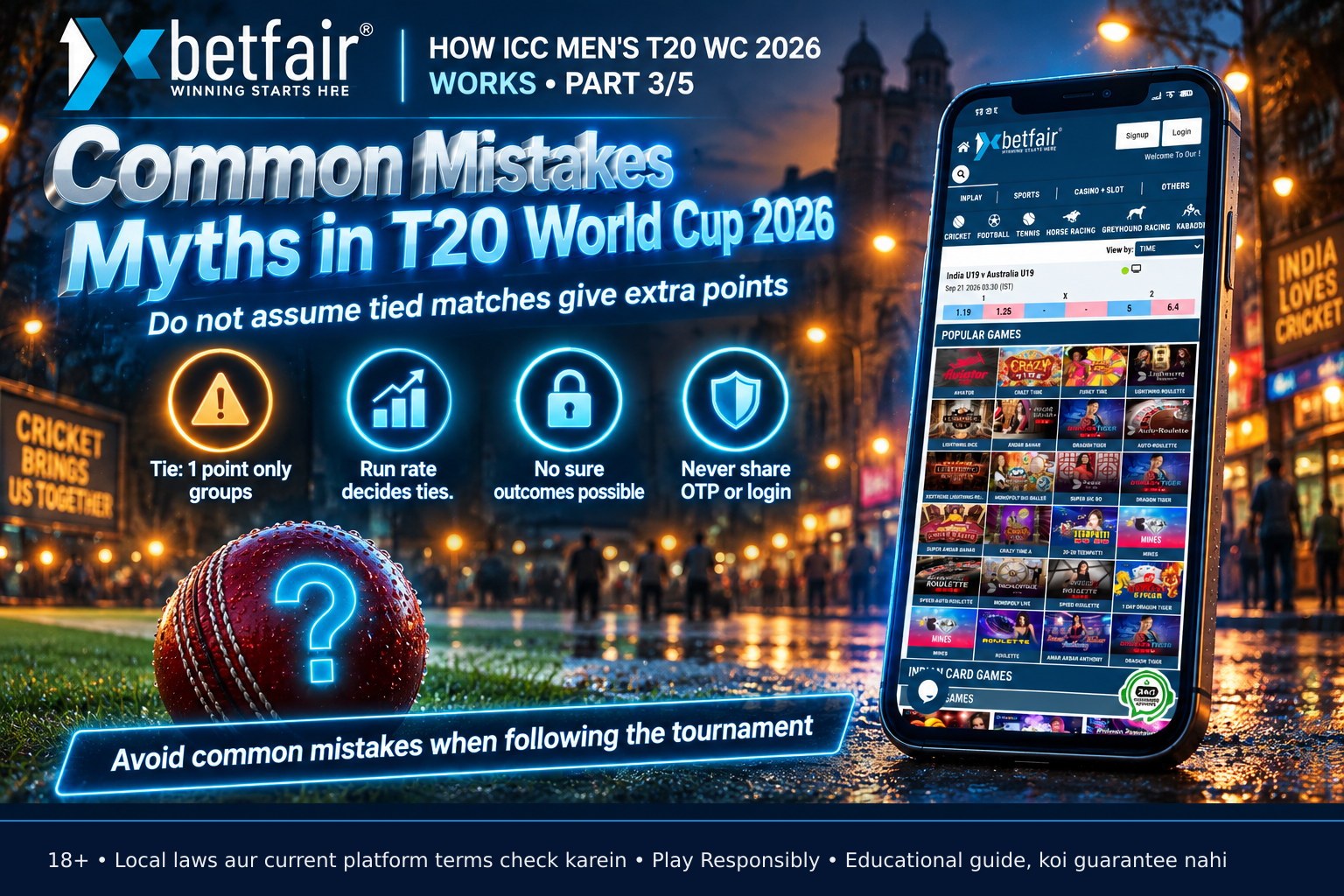
A tie occurs when both teams have scored the same number of runs after their full 20 overs (or the curtailed number of overs in rain-affected matches). In a knockout match or a Super 8 match where a result is required, a Super Over is played. Each team selects three batters and one bowler for the Super Over, which consists of one over (six legal deliveries) per side. The team scoring more runs in the Super Over wins.
If the Super Over itself is tied, the winner is determined by counting the number of boundaries (fours and sixes) hit by both teams together in the main match plus the Super Over. The team with the higher boundary count is declared the winner.
Note: In the group stage, a tied match simply gives each team one point. A Super Over is only bowled in knockout or Super 8 matches when a winner must be decided.
Knockouts: semi-finals and final
The four teams that qualify from the Super 8 are paired into two semi-finals. The format is single elimination: the winner of each semi-final advances to the final. If a semi-final is tied after the full 20 overs, a Super Over is played immediately. If the Super Over is also tied, the boundary-count rule applies.
The two winning semi-finalists meet in the final. The final follows the same tie procedure: full match, then Super Over, then boundary count if needed.
Device and account-security while following the tournament
When you are checking live scores, using a betting app, or participating in fantasy contests during the World Cup, keep these points in mind:
- Verified web address: Always type the official domain (1xbetfair.com) directly into your browser. Look for HTTPS in the address bar.
- Two-factor authentication (2FA): If the platform offers 2FA, enable it. This adds a second step (usually a code from an app or SMS) beyond your password.
- No shared OTP or PIN: Never share your one-time password or personal identification number with anyone, even if they claim to be from customer support.
- No unverified APK: Download apps only from the official app store or the website’s verified link. Sideloading APK files from unknown sources can expose your account to risk.
Check before you click: If you receive a message or link about "free World Cup predictions" or "guaranteed winning IDs", verify the web address and never enter your login details on an unfamiliar page.
Common mistakes to avoid
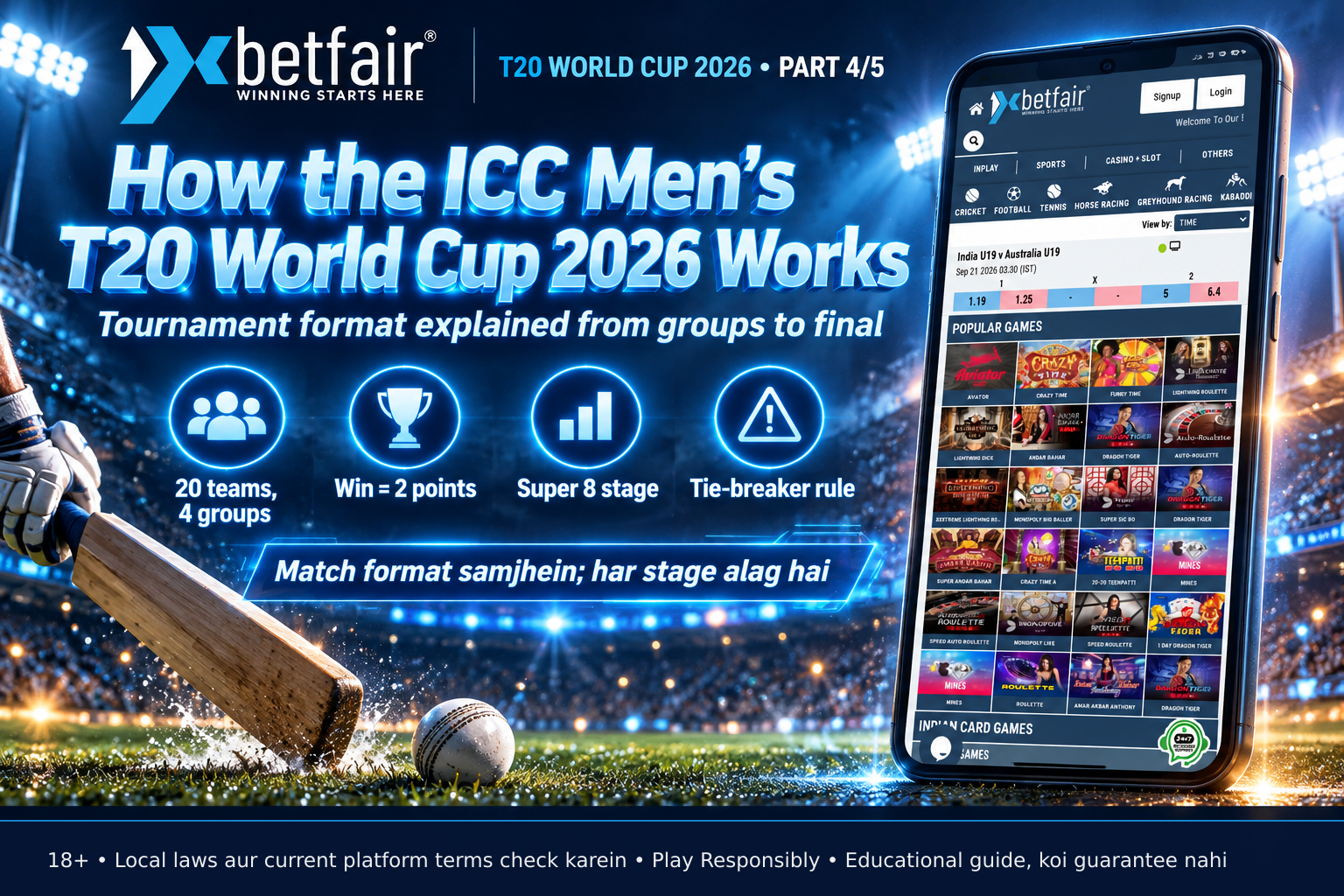
- Assuming a tied match means extra points for both teams in knockout games: Only in the group stage does a tie give one point each. In Super 8 and knockout matches, a result is required, and a Super Over decides it.
- Ignoring net run rate when points are level: Net run rate can be the difference between advancing and going home, especially when multiple teams finish with the same number of points.
- Betting on "sure-shot" outcomes: No tie-breaking rule or Super Over result can be predicted. The boundary-count rule is applied after the fact, not as a forecast.
- Sharing OTP or login details: This is the most common way accounts are compromised during high-traffic tournaments.
Pre-session checklist
| Action | Status |
|---|---|
| Open the official site (HTTPS verified) | ☐ |
| Enable 2FA on your account | ☐ |
| Check that your registered phone/email is accessible | ☐ |
| Set a budget for the tournament period | ☐ |
| Avoid clicking unknown "prediction" links | ☐ |
Brand section
This article is written for the 1xbetfair.com audience. If you are looking at offers or promotions on the 1xbetfair platform, check the current terms and conditions page on the site for any World Cup–related bonuses or enhanced odds. All such offers are subject to the platform’s standard terms, including eligibility, minimum deposit, and play-through requirements. Never assume a bonus is automatic; verify each offer on the official site before opting in.

One-line call to action
Follow the tournament, set your budget, and enjoy the cricket — responsibly.
FAQ
- How many teams play in the T20 World Cup? The 2026 tournament features 20 teams divided into four groups of five.
- What happens if two teams finish the group stage with the same points? The ICC first looks at net run rate. If that is also level, most wins are counted, then a draw of lots if still tied.
- Do tied group-stage matches go to a Super Over? No. In the group stage, a tied match gives each team one point. A Super Over is only bowled in Super 8 and knockout matches when a winner is required.
- How does the Super Over work? Each team faces one over (six legal balls). The team scoring more runs wins. If the Super Over is also tied, the team with the more boundaries (fours and sixes) hit in the main match plus the Super Over is declared the winner.
- How many teams advance from each group to the Super 8? The top two teams from each group qualify, plus the best two third-placed teams across all groups.
- What is the boundary-count rule? If a match and any Super Over are tied, the winner is the team that hit the most fours and sixes combined across both innings.
- Can a semi-final be tied after the Super Over? Yes. If the Super Over is tied, the boundary-count rule from the main match decides which team advances.
- How are the finalists decided? The two winners of the semi-finals play the final. If the final is tied, the Super Over and boundary-count rules apply in the same way.
- What is net run rate and how is it calculated? Net run rate is calculated by dividing the total runs scored by the total overs faced, minus the total runs conceded divided by the total overs bowled. A higher net run rate indicates a team has scored quickly and conceded slowly.
- Is there a third-place playoff match? No. The tournament progresses directly from the semi-finals to the final; there is no match for third place.
- What if rain interrupts a knockout match? The ICC uses the Duckworth-Lewis-Stern (DLS) method to calculate a target if the number of overs is reduced. If the match cannot be completed, it may be declared a no-result, and the team that finished higher in the Super 8 group advances.
- Can a team qualify with a loss in the group stage? Yes. The best two third-placed teams across all groups qualify for the Super 8, even though they have lost at least one group match.
- How are the semi-final pairings determined? The ICC publishes the pairing rules before the tournament. Usually, the top team from one Super 8 group plays the second team from the other group, and vice versa, to ensure balance.
- What happens if a team refuses to play or forfeits a match? A forfeit or refusal to play is treated as a loss for the defaulting team and a win for the opposing team, subject to ICC disciplinary rules.
- Where can I verify the official rules for the 2026 tournament? The full playing conditions and format details are published on the ICC’s official website and in the tournament technical manual. Always check the current official source if you are relying on specific rules for fantasy or prediction contests.
Short final takeaway
The T20 World Cup 2026 format gives every group match meaning, pushes teams through a second stage before the knockouts, and uses clear tie-breaking rules — Super Over, then boundary count — to ensure a result when a match is level. Know the stages, respect the maths, and play within your limits.
Sources
- International Cricket Council (ICC) – Men’s T20 World Cup 2026: Official playing conditions and format guide (opened 2026-03-15)
- ICC – Tournament playing conditions: Tie, Super Over and boundary-count procedures (opened 2026-03-15)
Related reading
- Delhi Premier League Explained: How the Tournament Works and How to Read the Matches (1xbetfaircustomercare.com)
- Vitality Blast (England T20) 2026 explained (1xbetfaircustomercare.com)
- Maharaja Trophy (Karnataka T20) Guide 2026 (1xbetfaircustomercare.com)
- Sheffield Shield explained: Australia’s first-class competition and its path to the Test side (1xbetfaircustomercare.com)
Visit the official 1xbetfair site: 1xbetfair.me. 18+ only. Please play responsibly.