
Jab Tiranga Lehrata Hai, Toh Sirf Ek Flag Nahi Lehrata
15 August ki subah kuch alag hoti hai. School ground mein bachche chhote-chhote flags lekar khade hote hain. Kahin patriotic songs baj rahe hote hain, kahin stage par speeches ki tayyari hoti hai. Phir ek moment aata hai — Tiranga hawa mein uthta hai.
Us waqt hum usually bas ek beautiful flag dekhte hain. Lekin zara ruk kar dekhiye. Upar kesari rang hai. Beech mein white band aur uske centre mein navy-blue Ashoka Chakra. Neeche green.
Teen colours. Ek Chakra. Ek Tiranga.
Lekin in colours ke peeche actual story kya hai?
15 August 2026 ke Independence Day par isi story ko simple Hindi mein samajhte hain. Kyunki Tiranga sirf ek national flag nahi, yeh India ki identity, history aur national values se juda hua ek powerful symbol hai.
Aur sabse interesting baat? Har colour ko alag se dekhein toh ek story milti hai. Teeno ko saath dekhein toh India ki ek bigger picture saamne aati hai.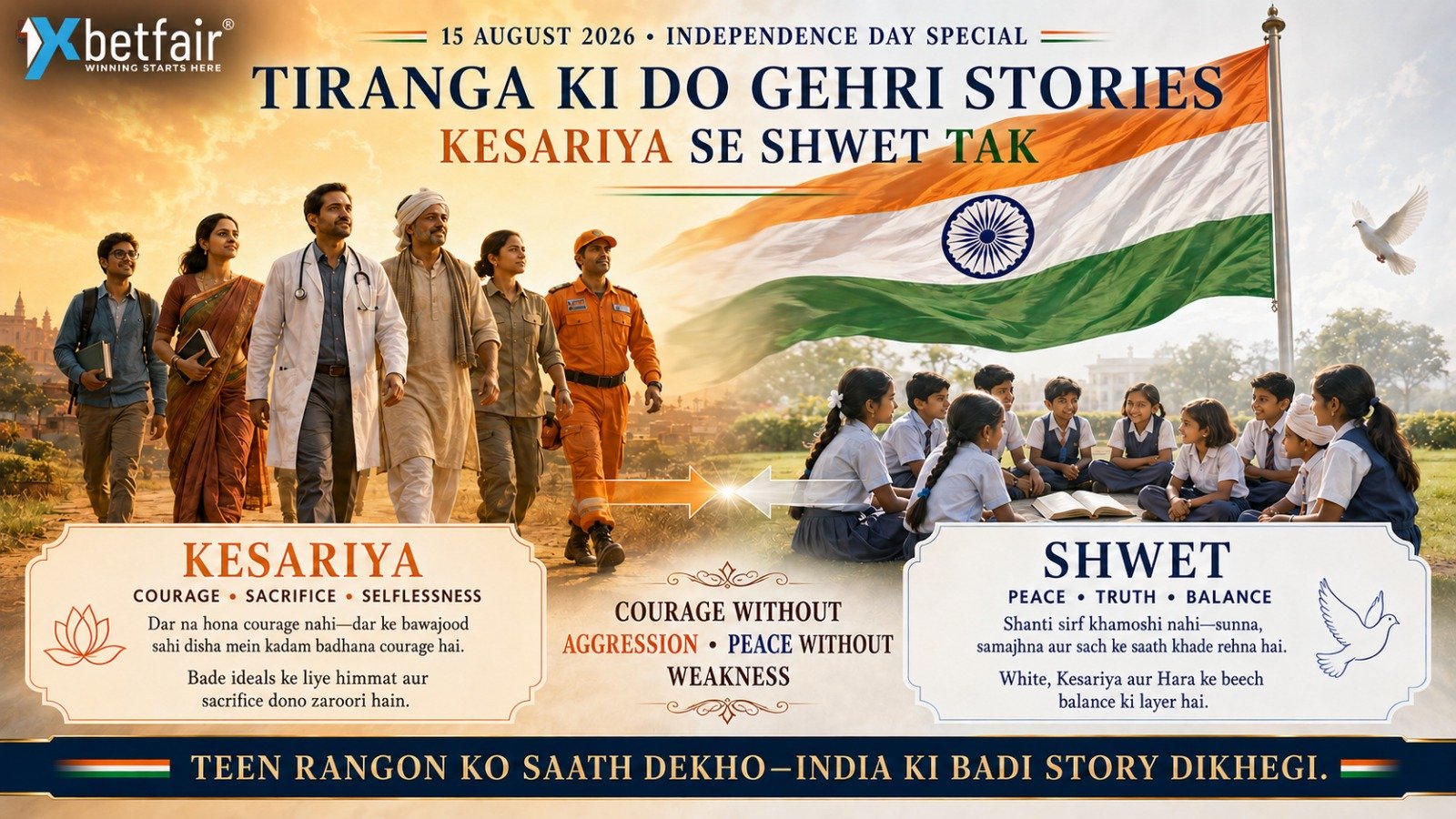
India 15 August ko Independence Day isliye celebrate karta hai kyunki 15 August 1947 ko India British rule se independent hua.
Indian National Flag ki present form bhi independence se kuch din pehle, 22 July 1947 ko, Constituent Assembly ne adopt ki thi. National Portal of India ke mutabik, present Tricolour mein deep saffron top par, white middle mein aur dark green bottom par hota hai, centre mein navy-blue wheel “Ashoka Chakra” hota hai.
Isliye 15 August aur Tiranga ka connection sirf celebration ka nahi hai. Dono ek historical turning point ko represent karte hain.
Aaj jab 15 August ko flag hoist hota hai, toh woh ek reminder bhi hai ki freedom ek historical achievement thi, aur national identity ek continuing journey hai.
Tiranga: Sirf Teen Colours Nahi, Ek Story Hai
Indian National Flag ko commonly “Tiranga” ya “Tricolour” kaha jaata hai.
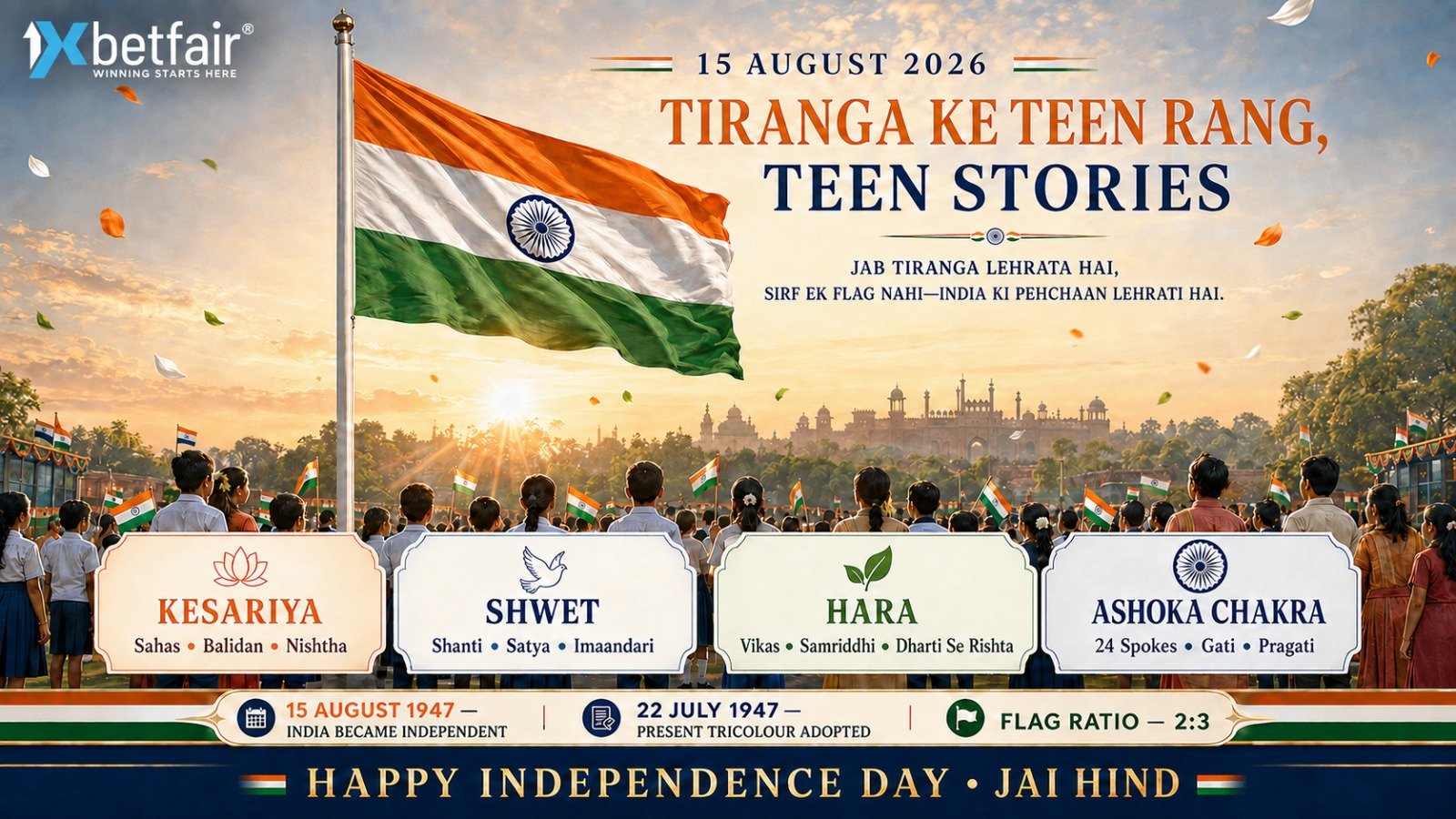
Flag horizontal tricolour hai. Teen equal bands hain — top par saffron, centre mein white aur bottom par green. White band ke centre mein navy-blue Ashoka Chakra hota hai jisme 24 spokes hain. Flag ka width-to-length ratio 2:3 hai.
Yahan ek simple way hai Tiranga ko yaad rakhne ka:
Saffron — courage aur sacrifice ki yaad.
White — peace aur truth ka idea.
Green — growth, fertility aur prosperity se connection.
Ashoka Chakra — movement, duty aur progress ke broader symbolism ko samajhne ka gateway.
Lekin ek important point: colours ko sirf one-line definitions mein lock karna Tiranga ki story ko bahut chhota kar deta hai. Real beauty tab samajh aati hai jab hum har colour ko larger national story ke context mein dekhte hain.
Saffron: Courage Aur Sacrifice Ki Story
Indian flag ka top band deep saffron, ya kesari, hota hai.
Is colour ko commonly courage, sacrifice aur spirit se associate kiya jaata hai. Socho ek aise moment ko jab kisi ko apne comfort zone se bahar nikal kar difficult decision lena ho. Courage ka matlab sirf fear ka absence nahi hota — courage ka matlab hai fear ke bawajood right direction mein step lena. Isi wajah se saffron ka visual impact bhi strong hai.
Independence ki story mein sacrifice ek important theme tha. Freedom movement ke bahut se chapters mein logon ne personal comfort, career, wealth aur safety tak ko risk par rakha. Is historical background mein saffron ko courage aur sacrifice se connect karna natural hai. Simple words mein:
“Saffron humein yaad dilata hai ki bade ideals ke liye himmat aur sacrifice dono ki zaroorat hoti hai.”
Lekin yahan ek mistake avoid karni chahiye. Saffron ko sirf “war” ya aggression ka colour samajhna accurate framing nahi hai. National symbolism ka focus courage, selflessness aur higher purpose ki taraf hai.
White: Peace, Truth Aur Balance Ki Story
Ab nazar flag ke centre par aati hai — white band.
White visually sabse calm part lagta hai. Aur symbolism ke level par bhi peace aur truth ka idea is colour se strongly associated hai.
Imagine karo ek classroom jahan 30 students hain. Agar har student sirf apni baat kare aur koi kisi ko na sune, toh noise hoga. Lekin jab listening, balance aur clarity aaye, tab conversation meaningful banti hai. White ko isi broader idea ke saath samjha ja sakta hai — peace, truth aur balance.
White ka placement bhi interesting hai — yeh saffron aur green ke beech mein hai. Visual level par, centre ek balancing layer create karta hai.
“Tiranga mein white colour peace aur truth ki symbolism se juda hai.”
Yeh message sirf 15 August ke liye nahi. Ek society ko strong banane ke liye courage ke saath peace aur clarity bhi chahiye.
Green: Growth Aur Prosperity Ki Kahani
Tiranga ka bottom band dark green hai.
Green ko growth, fertility aur prosperity se associate kiya jaata hai. Is colour ko samajhne ke liye India ke land, agriculture aur natural environment ke connection ko imagine karna useful hai. Green ek living colour hai — trees, crops, fields aur nature sab growth ka visual reminder dete hain.
Lekin green ki story sirf farming tak limited nahi hai. Growth ka meaning wider bhi ho sakta hai — society ka development, opportunities ka expansion aur future ki taraf movement.
“Green humein growth, prosperity aur life ke connection ki yaad dilata hai.”
Yahan ek beautiful contrast bhi hai. Saffron humein courage ki taraf dekhta hai. White balance aur peace ki taraf. Green future aur growth ki taraf. Teen colours ek saath dekhein toh message aur bhi richer ho jaata hai.
Ashoka Chakra: Centre Mein Yeh Wheel Kyun Hai?
Ab aate hain Tiranga ke centre ke sabse eye-catching element par — Ashoka Chakra.
Yeh navy-blue wheel Sarnath ke Lion Capital of Ashoka ke abacus par maujood Dharma Chakra ke design se associated hai. National Portal of India ke mutabik, Chakra ka diameter approximately white band ki width ke barabar hota hai aur isme 24 spokes hain.
Ashoka Chakra mein 24 spokes kyun hote hain?
24 spokes flag ka established design feature hain. Lekin internet par in 24 spokes ko 24 different virtues ya 24 hours se directly map karne wali lists bahut milti hain. Aise interpretations ko official historical fact ke roop mein present nahi karna chahiye jab authoritative source un specific mappings ko establish nahi karta. Isliye safest aur strongest explanation yeh hai:
Chakra movement aur Dharma se connected historical symbolism ko flag ke centre mein laata hai.
Wheel ka shape bhi ek important visual message deta hai — wheel rukta nahi, aur national life bhi static nahi honi chahiye. Isi thought ko modern language mein hum progress, movement aur responsibility ke idea se connect kar sakte hain, without turning a popular interpretation into an official fact.
Tiranga Aaj Jaisa Kaise Bana? Ek Short History
Indian flag ki journey ek single-day story nahi hai. Freedom movement ke different phases mein flags aur symbols ka use hua. Lekin present national flag ko Constituent Assembly ne 22 July 1947 ko adopt kiya, just before independence.
National Portal of India ke mutabik, present flag ne Dominion of India ke national flag ke roop mein 15 August 1947 se 26 January 1950 tak service ki, aur uske baad Republic of India ke flag ke roop mein continue kiya.
Pingali Venkayya ka naam Indian flag history ke context mein widely associated hai, lekin historical discussions mein design evolution ko simple “ek person ne ek din mein final flag bana diya” story bana dena oversimplification ho sakta hai.
Better approach hai evolution ko samajhna — symbols change hue, designs develop hue aur independence ke moment par ek national flag adopt hua jo modern India ki identity ka permanent symbol bana.
Tiranga Aur Independence Day: Connection Itna Powerful Kyun Hai?
15 August ko jab Tiranga rise karta hai, toh scene sirf ceremonial nahi hota. Flag freedom movement ki memory ko present moment se connect karta hai.
Ek child school assembly mein flag dekhta hai.
Ek family ghar ke paas celebration dekhti hai.
Ek citizen national ceremony follow karta hai.
Har jagah context alag ho sakta hai, lekin symbol same rehta hai. Isi consistency ki wajah se national flag identity ka powerful visual shorthand ban jaata hai.
Freedom → Identity → Unity → Responsibility.
Yeh four-word chain Tiranga ko samajhne ka simple modern framework ho sakti hai. Freedom humein past yaad dilaati hai. Identity humein batati hai hum kis collective story ka part hain. Unity diversity ke beech connection ki taraf point karti hai. Aur responsibility humein remind karti hai ki national values sirf slogans nahi, daily behaviour ka part bhi ho sakti hain.
Common Myths vs Facts
Myth Fact
Ashoka Chakra ki 24 spokes ki ek officially fixed list hai jisme har spoke ek specific virtue ko represent karta hai 24 spokes official design ka part hain, lekin popular internet lists ko automatically official interpretation nahi maana jaana chahiye
Tiranga ke colours ka meaning bas teen words mein completely explain ho jaata hai Courage, peace, truth, growth aur prosperity useful shorthand hain, lekin national symbols ko broader historical aur cultural context mein samajhna better hai
Independence Day aur Republic Day same historical event hain Dono national days hain lekin unka historical meaning different hai — Independence Day 15 August 1947 ki independence se connected hai, jabki Republic Day 26 January 1950 ko Constitution ke coming into effect se connected hai
15 August 2026: Tiranga Ko Samajhne Ka Sabse Simple Formula
Agar school student ko Tiranga ek minute mein samjhaana ho, toh yeh framework yaad rakhiye:

Saffron → Courage + Sacrifice
White → Peace + Truth
Green → Growth + Prosperity
Ashoka Chakra → Dharma Chakra tradition + Movement/Progress symbolism
Aur phir ek bigger line: “Past ki courage, present ka balance aur future ki growth.”
Tiranga Sirf 15 August Ka Symbol Nahi
Ek common habit hai: Tiranga ko sirf Independence Day ke saath associate karna. Lekin national flag ka significance calendar ke ek din tak limited nahi hota. 15 August us symbolism ko especially visible bana deta hai. Schools, public events, homes aur national ceremonies mein flag ek shared visual language create karta hai. Aur yahi national symbols ki strength hoti hai.
Different languages. Different states. Different traditions. Lekin ek common symbol. Tiranga isi shared identity ka ek powerful visual expression hai.
Tiranga Ko Respect Karne Ka Practical Meaning
Patriotism sirf loud slogans ka naam nahi. Respect ka practical side bhi hota hai.
India mein National Flag ke display aur treatment ko lekar rules aur legal provisions hain. Flag Code of India flag ki specifications lay down karta hai, jabki Prevention of Insults to National Honour Act National Flag ke prati disrespect ke acts ko address karta hai. Isliye Tiranga ko responsibly display karna bhi national respect ka part hai.
15 August 2026 Par Ek Baar Tiranga Ko Is Tarah Dekhiye
Agli baar 15 August ko Tiranga hawa mein lehrata dikhe, toh teen quick questions poochhiye:
Saffron mujhe kis value ki yaad dilaata hai?
White mujhe kis balance ki yaad dilaata hai?
Green mujhe kis future ki yaad dilaata hai?
Phir centre mein Ashoka Chakra dekhiye. Wheel static nahi lagta — uska design hi movement ka feel deta hai.
Maybe isi liye Tiranga ko dekhna aur Tiranga ko samajhna do alag experiences hain.
FAQs
Q1. Tiranga ke teen rang kya represent karte hain?
Saffron courage aur sacrifice se, white peace aur truth se, aur green growth, fertility aur prosperity se associated hai. Ashoka Chakra centre mein Dharma Chakra ke design se linked navy-blue wheel hai.
Q2. Indian flag ko Tiranga kyun kaha jaata hai?
“Tiranga” ka simple meaning hai three-coloured flag. Indian National Flag mein saffron, white aur green ki three horizontal bands hoti hain, isi wajah se ise commonly Tiranga kaha jaata hai.
Q3. Ashoka Chakra mein kitne spokes hote hain?
Ashoka Chakra mein 24 spokes hote hain. Yeh navy-blue wheel flag ke white band ke centre mein hota hai, aur iska design Sarnath ke Lion Capital of Ashoka ke abacus par maujood Dharma Chakra se associated hai.
Q4. 15 August ko Independence Day kyun manaya jaata hai?
15 August 1947 ko India British rule se independent hua tha. Isi historical milestone ki remembrance mein har saal 15 August ko Independence Day celebrate kiya jaata hai.
Q5. Indian National Flag kab adopt hua?
Indian National Flag ki present form Constituent Assembly ne 22 July 1947 ko adopt ki thi.
Q6. Indian flag ka ratio kya hai?
Indian National Flag ka width-to-length ratio 2:3 hai.
Q7. Tiranga important kyun hai?
Tiranga India ki national identity aur freedom ki historical journey ka powerful symbol hai. Isliye national celebrations mein iska emotional aur symbolic importance bahut strong hai.
Q8. Flag ko respect karna important kyun hai?
Indian Constitution ke Fundamental Duties mein citizens ke liye National Flag aur National Anthem ka respect karna specifically mentioned hai.
Final Thought: Teen Rang, Ek Kahani
15 August ki subah jab Tiranga hawa mein uthta hai, us moment ko sirf ek ceremony samajhna easy hai. Lekin agar aap ek second ke liye ruk kar dekhein, toh story deeper ho jaati hai.
Saffron courage ki taraf dekhta hai. White peace aur truth ki taraf. Green growth aur future ki taraf. Aur centre ka Ashoka Chakra humein movement aur Dharma ki historical symbolism se connect karta hai.
Teen colours alag hain. Lekin Tiranga ek hai. Aur isi mein uski sabse beautiful story chhupi hai.