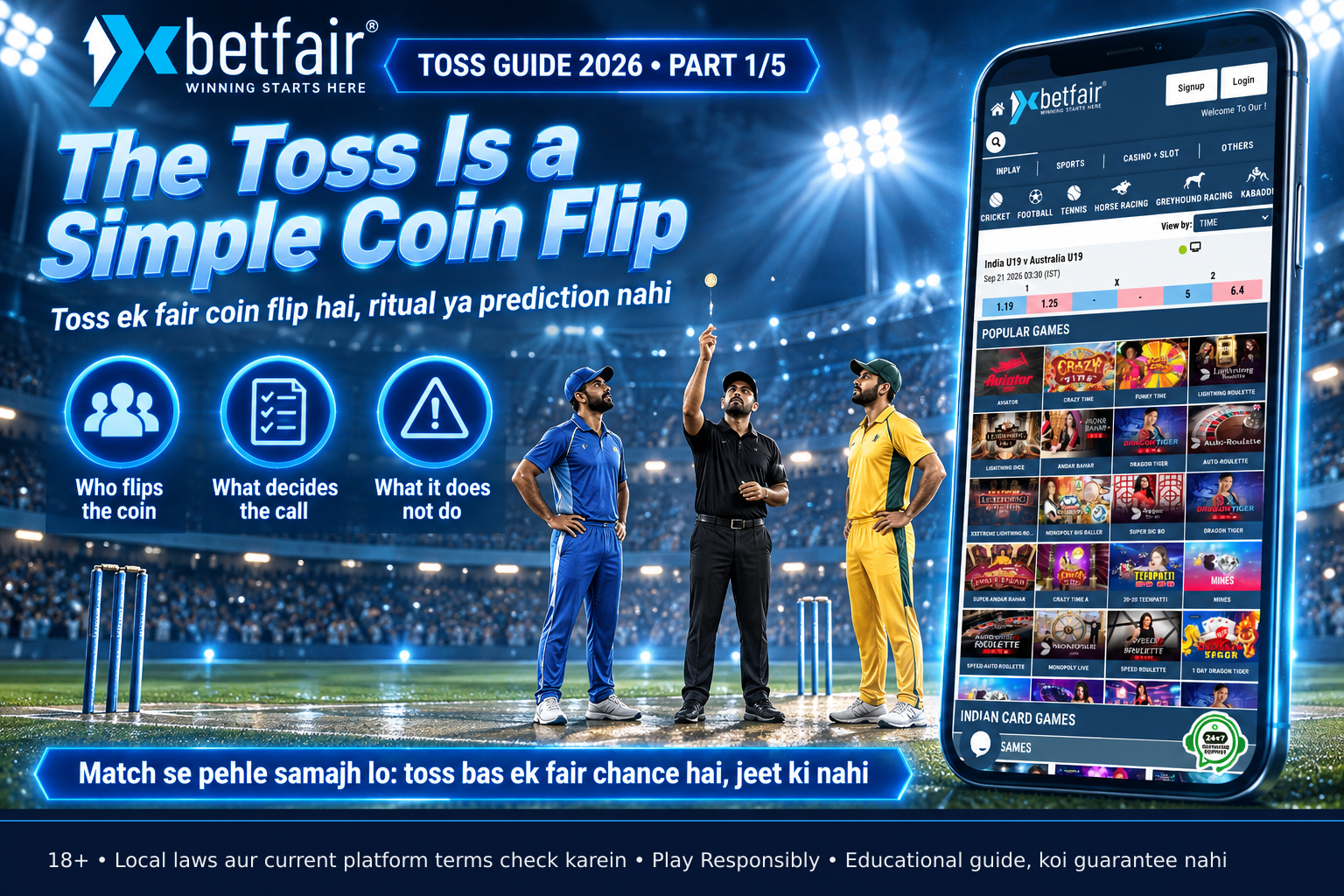
Quick answer: The toss in cricket is decided by a fair coin flip between the two captains, supervised by the match referee, to determine which team gets to choose whether to bat or bowl first. This choice is based on pitch conditions, weather forecast, team strengths, and the match context — not luck alone. There is no guaranteed outcome from winning the toss; it only gives the first strategic call.
Key takeaways
- The toss is a literal coin flip, not a prediction or ritual.
- Captains decide based on pitch, weather, team balance, and game format.
- Winning the toss does not assure victory; it only grants the initial choice.
- Always check current match conditions before forming an opinion.
- Play responsibly: outcomes depend on performance, not the toss alone.
Opening scene
Raat ke 9:30 baje hain, aapne apna phone uthaya aur ek live cricket match ka toss dekh rahe ho. Doosri taraf se commentators bol rahe hain, “Toss bahut important hai aaj kyunki pitch thoda gila lag raha hai.” Lekin wait — kya aapne socha hai ki toss kaise decide hota hai, aur kaptaan kya soch kar bat ya bowl first ka decision lete hain? Is guide mein aapko toss ka mechanism samjhaya jaega, koi sure-shot formula nahi, bas samajh ke aap apni soch ko sharpen kar sakte ho. Hum koi winning tip nahi denge, kyunki jeet kaptaan ke decision se nahi, team ke performance se hoti hai.
What the toss is and why it matters
The toss is a simple procedure: before the match starts, the two captains meet on the pitch with the match referee. One captain calls heads or tails as a coin is flipped. The winner decides whether their team will bat or bowl first. This choice matters because it sets the tone for the innings — batting first lets a team set a target, while bowling first allows them to chase under known conditions. However, the toss itself does not change player skill, pitch behavior, or weather; it only determines who gets to act first based on current assessments. Understanding this helps you see cricket as a game of conditions and strategy, not superstition.
5-Point Toss Decision Framework
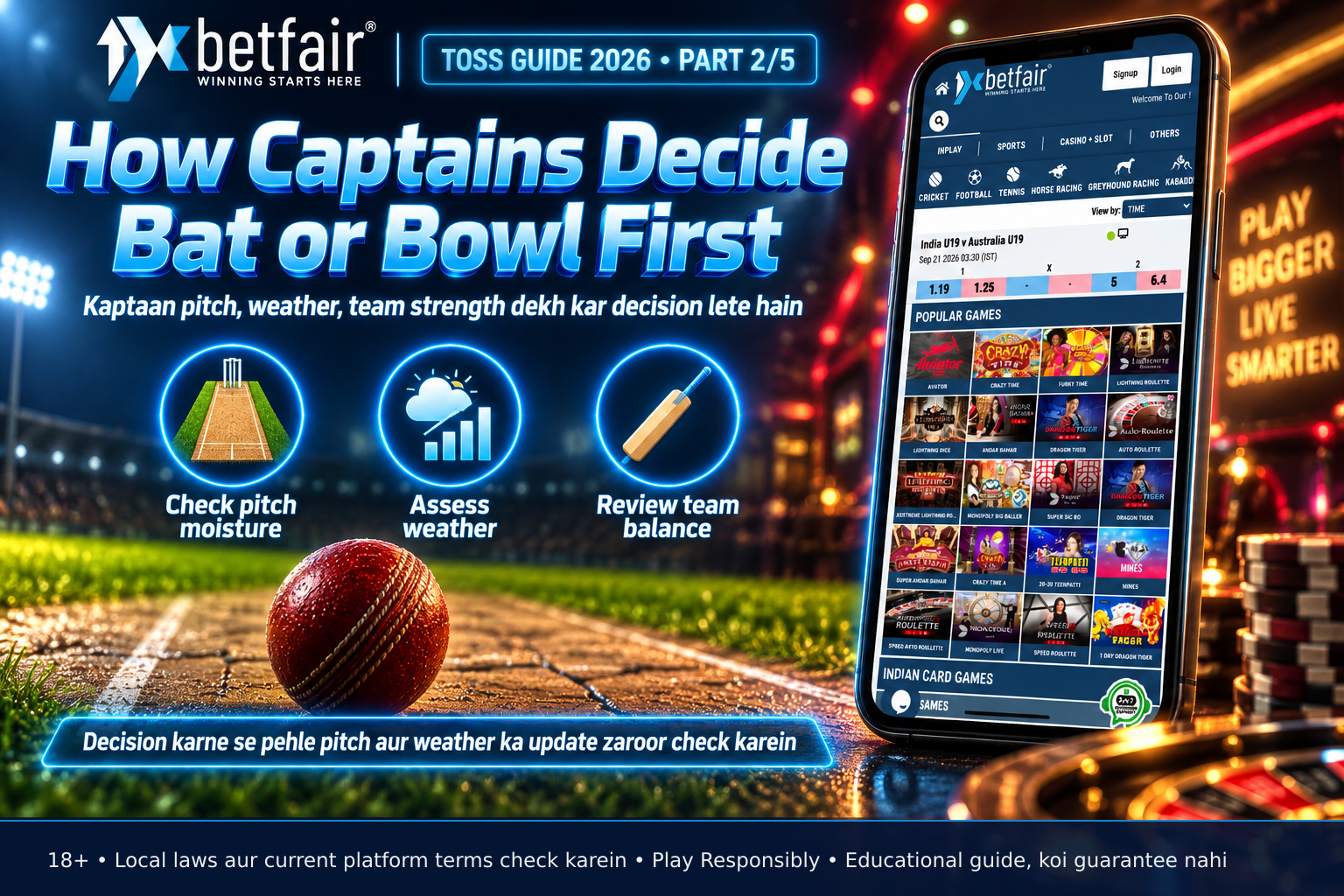
Here is how captains typically approach the toss decision, broken into actionable checks.
1. Check the pitch report
Captains look at pitch moisture, grass cover, cracks, and hardness. A green, damp pitch favors seam bowlers early, so bowling first may be chosen. A dry, flat pitch favors batting, so setting a target first might be preferred. Groundstaff updates and early bowler feedback inform this.
2. Assess the weather forecast
Overcast conditions help swing bowling, making bowling first attractive. Strong sun can flatten a pitch by afternoon, favoring teams batting second in day games. Rain interruptions make Duckworth-Lewis-Stern (DLS) calculations complex, so captains may prefer to bat first to avoid chasing a revised target.
3. Evaluate team strengths
If a team has strong openers but weak death bowling, they may bat first to capitalize. If their bowling attack is potent in the first hour but fades later, bowling first makes sense. All-rounder balance and batting depth also shape the call.
4. Consider match format and context
In Test matches, batting first is often preferred to exploit fresh pitch. In T20s, chasing is often favored due to dew and powerplay dynamics. In knockout games, captains may back their chase ability or prefer to set a target under pressure.
5. Review recent venue history
Captains check how teams have fared batting first vs. bowling first at that ground in recent matches. If teams batting first have won 70% of the last 10 games, the trend may influence the call — though past results never guarantee future outcomes.
How pitch and weather actually work
Cricket pitches are not uniform; they evolve during play. A pitch with grass and moisture assists bowlers in the first session because the ball grips the seam and moves off the surface. As sun dries it out, the pitch flattens and becomes better for batting. Weather amplifies this: clouds keep the pitch cool and moist, aiding swing; strong sun evaporates moisture, helping batters. These are physical processes, not omens. For example, if the forecast shows 80% humidity and overcast skies at 10 AM, captains may expect morning swing and choose to bowl first. If the sun is expected to break by noon and the pitch is dry, they may opt to bat first to exploit early pace before it flattens.
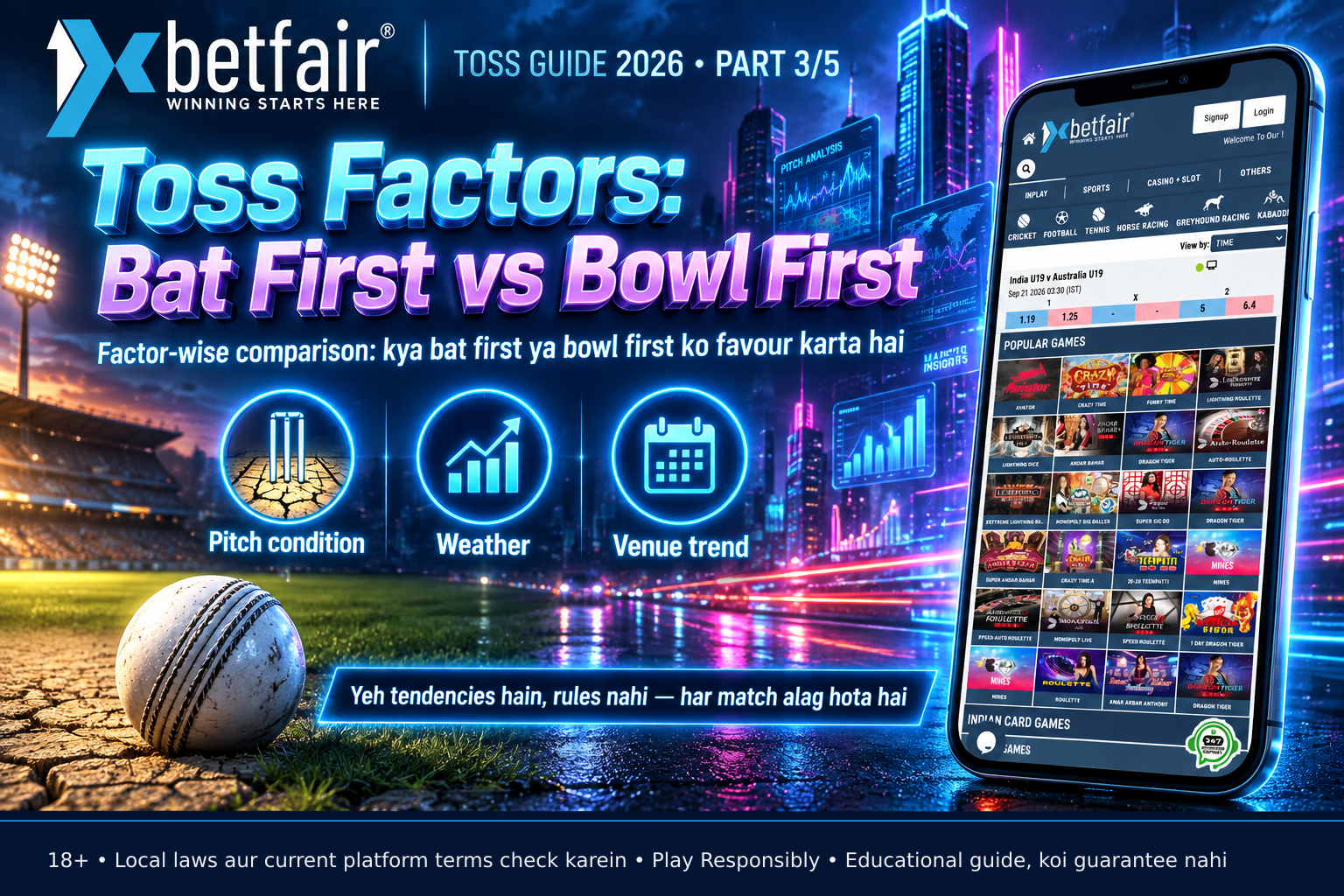
Comparison: Factors favoring bat first vs bowl first
| Factor | Favors Bat First | Favors Bowl First |
|---|---|---|
| Pitch condition | Dry, flat, minimal grass | Green, moist, visible seam |
| Weather | Sunny, low humidity | Overcast, high humidity |
| Team strength | Strong top order, weak death bowling | potent new-ball attack, weak openers |
| Format | Test match, 50-over (setting target) | T20, day-night (chasing with dew) |
| Venue trend | Teams batting first won 60%+ recent | Teams bowling first won 60%+ recent |
Note: These are general tendencies, not rules. Each match is unique.
Device and account security
While watching the toss, ensure you are on the official 1xbetfair.com website (check HTTPS and the padlock icon). Never share your OTP, PIN, or password with anyone claiming to be support. Enable 2FA in your account settings for added security. Avoid downloading apps from unverified sources; use only the official app from verified stores. Your session safety starts with these basics, not with predicting toss outcomes.
Common mistakes to avoid
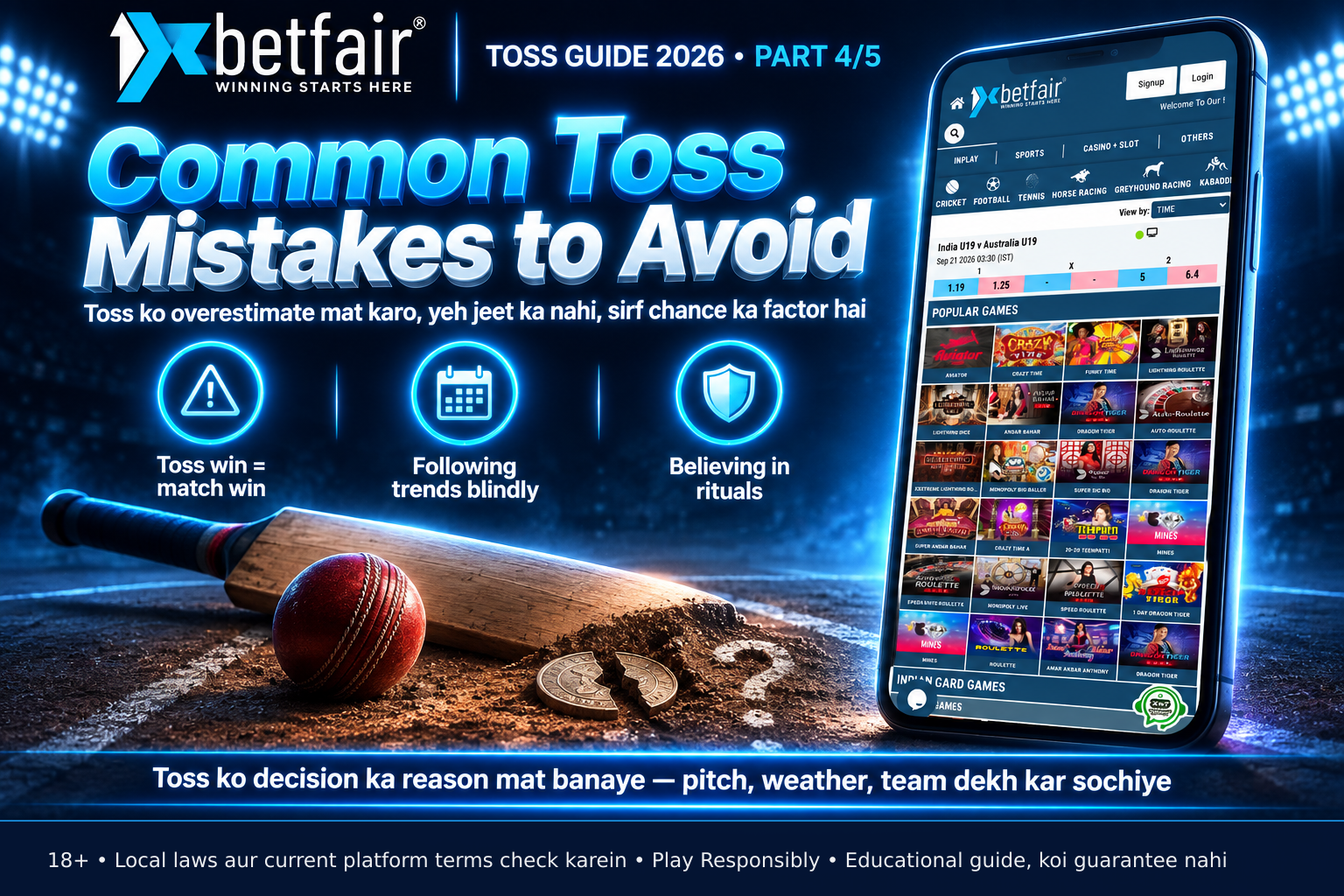
- Assuming the toss winner will win the match — correlation is not causation.
- Following toss trends blindly without checking current pitch and weather.
- Believing rituals or superstitions influence the coin flip — it is random.
- Thinking you can “predict” the toss based on astrology or luck — it is a physical flip.
- Using toss outcome as the sole basis for betting decisions — always assess full context.
Pre-session checklist
Use this table before forming any opinion on a match.
| Check | Status (✓/✗) |
|---|---|
| Verified pitch report from official source | |
| Current weather forecast checked | |
| Team lineup and recent form reviewed | |
| Match format and context understood | |
| Responsible play budget set (if applicable) |
Brand section
1xbetfair.com provides access to live cricket matches and related information. For specific features, withdrawal times, or bonus offers, always check the current terms on the official platform page. No guarantees are made about outcomes based on toss or any other factor.
Call to action
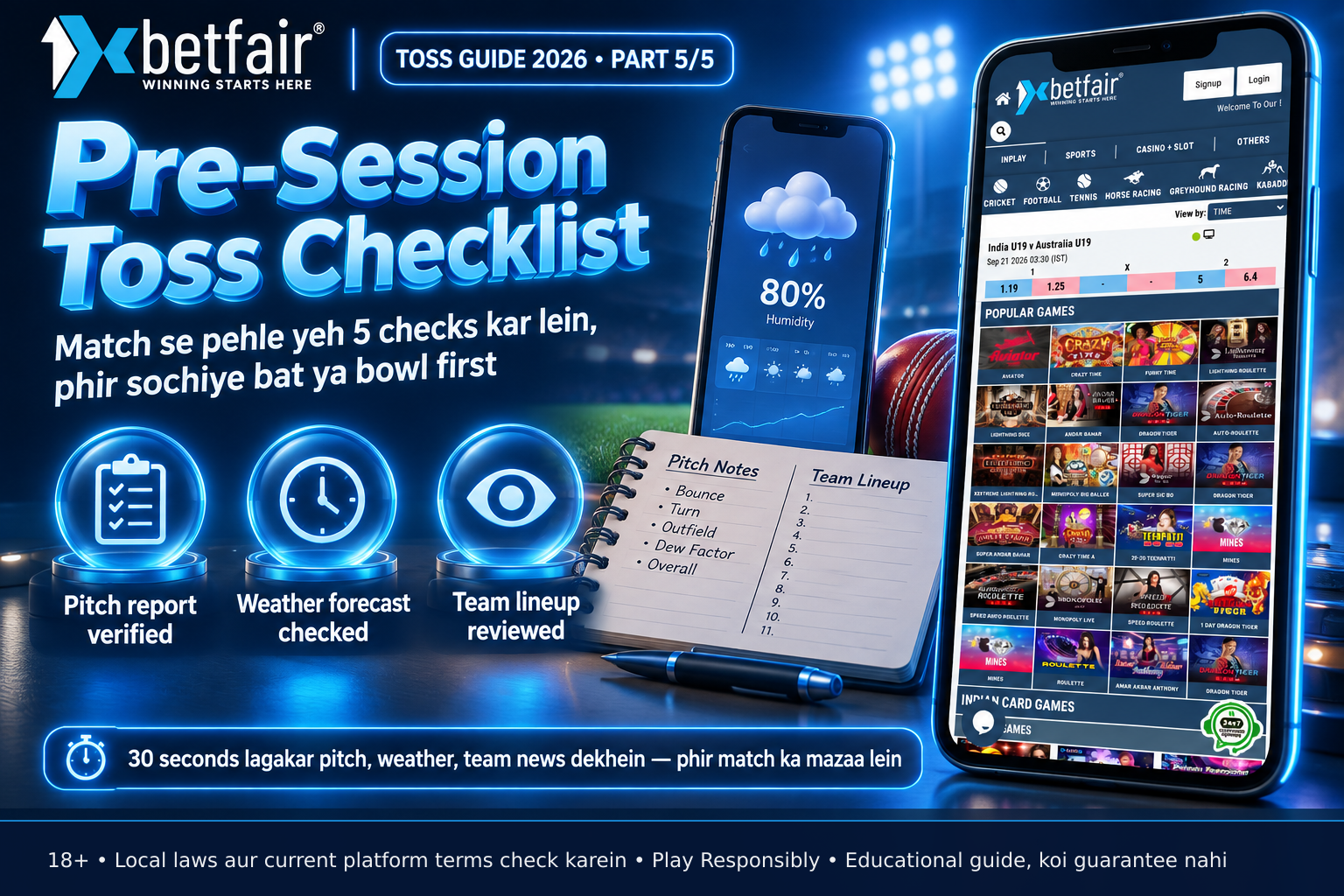
Before your next match session, take 30 seconds to check pitch, weather, and team news — then enjoy the game responsibly.
FAQ
Kya toss jeetne se match jeetne ki guarantee hoti hai? Nahi, toss jeetne se sirf pehli inning ka choice milta hai, match ka result team ke performance se depend karta hai.
Toss kaise hota hai, aur kon uski nigrani karta hai? Ek sikka uphalaya jata hai, ek kaptaan heads ya tails ka call karta hai, aur match referee yeh process monitor karta hai ki sachhi ho.
Agar pitch gili hai to kaptaan kya karte hain? Waqt ke hisab se, agar seaming ki samay hai to bowl first choose kar sakte hain taaki early movement ka fayda utha sake.
Dew ka toss par kya effect hota hai? Dew gend ko slippery banata hai, jisse gripping tough ho jaati hai; isliye day-night matches mein captains vaak chase prefer karte hain.
Overcast mausam mein kyun bowl first pasand kiya jaata hai? Badalon ke neeche swing zyada hoti hai, jisse new-ball bowlers ko early wickets milein ki sambhavna badh jati hai.
Test match mein toss ka kya role hota hai? Tests mein pitch pehle din sehat lagti hai, isliye kaptaan vaak bat first choose karte hain taaki bada score khada kar sake.
T20 mein toss decision kaise alag hota hai? T20 mein chasiing ofta easy manta jaata hai due to dew and powerplay, lekin yeh har ground par same nahi.
Captain toss ke hisab se strategy change karte hain? Ha, jaise ki agar woh bat first choose karte hain to unki planning peak overs mein aggression ya consolidation ke hisar se hoti hai.
Kya hum apne andar toss ka andaza laga sakte hain? Sikka ka result complete random hai; koi bhi pattern ya andaza reliable nahi ho sakta.
Match start hone se pehle toss kab hota hai? Toss match ke shuru se 15-30 minute pehle hota hai, jisse dono teams ko time milta hai apni playing XI finalize karne ka.
Agar toss galti se ho jaye to kya hota hai? Agar koi confusion ho, match referee process ko repeat karta hai ya rules ke mutabik decision leta hai.
Toss ka decision kaptaan akela leta hai ya team ke saath? Kaptaan final decision leta hai, lekin woh usually senior players, coach, aur support staff se mashwara karta hai.
Venue history toss decision par kya asar dalta hai? Pehle ke match ka data dekha jaata hai, lekin har saal conditions change hoti hain, isliye yeh sirf ek factor hai.
Responsible play ke liye toss kya mahatva rakhta hai? Toss bas ek starting point hai; budget aur limits aapke hisab se set byپnen honi chahiye, match ke kisi bhi hisab par nahi.
Final takeaway
The toss is a fair coin flip that gives the first strategic call — nothing more. Captains decide based on pitch, weather, team balance, and format, not luck. Understanding this helps you appreciate cricket as a game of skill and conditions. Always check current facts, avoid superstition, and play responsibly.
Sources
- Standard cricket playing conditions (ICC)
- Groundskeeping guides (MCC)
- Match referee protocols (ICC)
- Weather impact studies (various sports science journals, accessed 2026)
Note: All facts are based on general cricket mechanics. For live match details, check official sources.
creative {"series": "1xbetfair GUIDE 2026 • PART 1", "headline": "Bat or bowl first: how the toss is decided", "subheadline": "Understand the real factors behind a captain’s call — no myths, no guarantees.", "cards": [{"title": "Coin flip, not fate", "text": "Toss ek fair sikka hai, jo pehla choice deta hai — jeet ki guarantee nahi."}, {"title": "Pitch aur weather check karo", "text": "Kaptaan dekhta hai: pitch gili ya sukhi? Mausam overcast ya sunny? Isse decision hasil hota hai."}, {"title": "Team strength ka role", "text": "Agar new-ball attack strong hai to bowl first, agar top order hai to bat first — strategy ke hisab se."}, {"title": "Format mein farq", "text": "Test mein bat first often preferred, T20 mein chase ka trend — lekin har match alag hota hai."}, {"title": "Responsible play yaad rakho", "text": "Budget pehle set karo, toss ke hisab se nahi. Jeet performance se hoti hai, luck se nahi."}], "example": "Example: Overcast morning, green pitch → captain may choose bowl first to exploit early swing.", "warning": "TOSS OUTCOME ≠ MATCH RESULT"}
Related reading
- Liga MX explained 2026: Apertura, Clausura and Liguilla basics (1xbetfaircustomercare.com)
- Primeira Liga (Portugal) Guide 2026 (1xbetfaircustomercare.com)
- Vitality Blast (England T20) 2026 explained (1xbetfaircustomercare.com)
- Baccarat explained 2026: player, banker and tie bets, commission and edge (1xbetfaircustomercare.com)
Visit the official 1xbetfair site: 1xbetfair.me. 18+ only. Please play responsibly.